
You are using an out of date browser. It may not display this or other websites correctly.
You should upgrade or use an alternative browser.
You should upgrade or use an alternative browser.
Performance air filters
- Thread starter AntStark
- Start date


Had a K&N 57i Induction kit on my 2.8, the whoooooosh sounded great but that's about it, it definitely went better on returning to stock.K&N, Pipercross etc ..anyone fit one..are they worth it, if so what’s best for an M54 ?

I think any gain is so small it's not really worth it also some foam filters need oiling. If any oil gets in to the maff sensor it can ruin it. A genuine new maff is about £300 so I wouldn't risk it

I put a Pipercross panel in mine 6 years ago when I did the M54 manifold conversion, their not oiled filters so I’ve not had any Maf issues fantastic improvement but I think that was mainly down to the manifold.
Also put one in my RRS TDV6 and it improved responsiveness no end.
Also put one in my RRS TDV6 and it improved responsiveness no end.

It’s only worth if you separate the intake from engine bay, otherwise it might even decrease the performance. With oem box maybe the airflow is restricted, but the air is cold. With just removing air box, and replacing it with cone air filter, the engine will be getting hot air from engine bay.

- Joined
- Aug 21, 2022
- Points
- 89
I fitted a KN filter to my z3 at the same time as having a complete after market exhaust fitted(powerflo with single sport cat.)I have markedly better acceleration .increased air induction and the exhaust plus of course E5 fuel gave my old 2ltr a right lift...Largest contribution by the exhaust .sounds good too.
.Largest contribution by the exhaust .sounds good too.
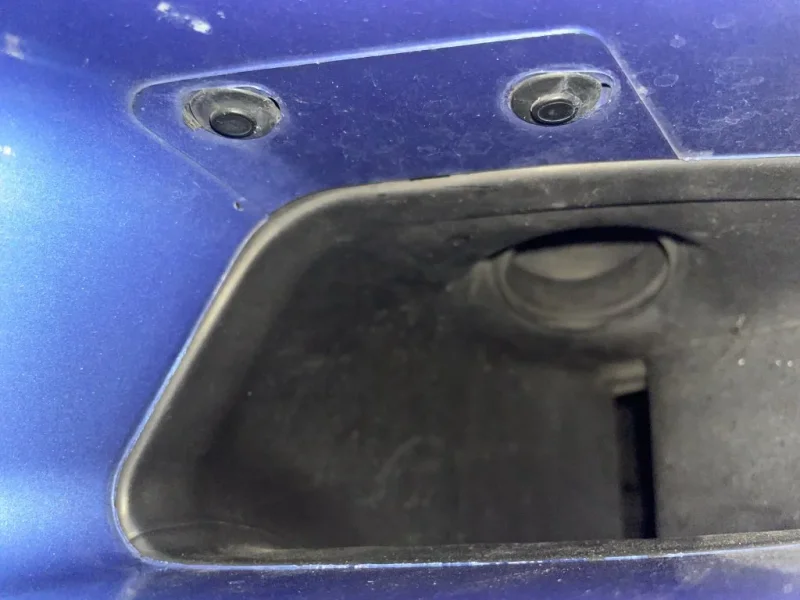
Curious… the air intake inside the brake duct looks like the pressure would be negative pressure… like venturi. Has anyone put a lip on front edge or scoop on back side of this orifice… to push air into the air box or cone filter downpipe?
The attached photo is looking up… where intake duct is recessed into duct. Thanks.
The attached photo is looking up… where intake duct is recessed into duct. Thanks.
Attachments

I love the sound you get with, so called, performance filters. (Or ram pipes and no filter  )
)
I say 'so called' because the throaty roar makes you drive different. Pedal to the metal. Holding gears longer. I just love that induction sound.
But driving different doesn't actually make the car faster. 0-60 Against the stop watch the stock filter was always quicker. I didn't believe it either.
But for years i stuck to my guns and kept the noise. Even though at 100mph the car would start jerking because it just wasn't tuned right
)I say 'so called' because the throaty roar makes you drive different. Pedal to the metal. Holding gears longer. I just love that induction sound.
But driving different doesn't actually make the car faster. 0-60 Against the stop watch the stock filter was always quicker. I didn't believe it either.
But for years i stuck to my guns and kept the noise. Even though at 100mph the car would start jerking because it just wasn't tuned right

If you have made several improvements at the same time you do not know if the filter makes any difference, and most people think that more noise equals more power! There are lots of compelling reasons to avoid these toys, unless you want intake noise. Basically, a K&N may give a slightly higher flow rate when new, but when slightly fouled the flow rate is lower than the standard item. As the 'opened out' area of the K&N is less than the original, this is not surprising.
You are better to make up a cold air intake - I made mine from B&Q rainwater pipe and a few elbows, costing about £2 and an afternoon's work. I think that for very sound reasons it must improve on the original torturous intake path, but have never had the car on a dyno since, although I find small improvements in fuel consumption and accelleration. See my article on an improved intake for the Z3. https://zroadster.org/articles/bmw-z3-a-better-air-intake-by-mike-fishwick.43/
You are better to make up a cold air intake - I made mine from B&Q rainwater pipe and a few elbows, costing about £2 and an afternoon's work. I think that for very sound reasons it must improve on the original torturous intake path, but have never had the car on a dyno since, although I find small improvements in fuel consumption and accelleration. See my article on an improved intake for the Z3. https://zroadster.org/articles/bmw-z3-a-better-air-intake-by-mike-fishwick.43/
Last edited:

- Joined
- Dec 8, 2011
- Points
- 165
Curious… the air intake inside the brake duct looks like the pressure would be negative pressure… like venturi. Has anyone put a lip on front edge or scoop on back side of this orifice… to push air into the air box or cone filter downpipe?
The attached photo is looking up… where intake duct is recessed into duct. Thanks.
You are not wrong about the Bernoulli Effect causing a negative pressure, but it would be miniscule relative to the "sucking effect" of six cylinders consuming over a million litres of air per minute at full chat. On the other hand - every little helps.
I have thought about it, but never done it. It could be a project for the summer.
I have a manometer port on my air box, so I could measure the pressure at a set speed with and without the modification.
I'm not sure how critical brake temperature is. If it is close to critical, it could be the limiting factor.
Manometer! More gauges…. That’s fun.
I wouldn’t block the duct… I was thinking a lip on front edge or scallop on back edge for directing air in.
Mikes write-up is very good, but not sure it’s M as my filter box is different? Also like the use of word “wend”, as describing air migration through ducts. Good stuff.
I wouldn’t block the duct… I was thinking a lip on front edge or scallop on back edge for directing air in.
Mikes write-up is very good, but not sure it’s M as my filter box is different? Also like the use of word “wend”, as describing air migration through ducts. Good stuff.

- Joined
- Feb 18, 2016
- Points
- 246
- Model of Z
- Z3M Imola and Z4 (e89)
Didn't you do a bench test on performance oiled filters vs stock paper filters some time ago?You are not wrong about the Bernoulli Effect causing a negative pressure, but it would be miniscule relative to the "sucking effect" of six cylinders consuming over a million litres of air per minute at full chat. On the other hand - every little helps.
I have thought about it, but never done it. It could be a project for the summer.
I have a manometer port on my air box, so I could measure the pressure at a set speed with and without the modification.
I'm not sure how critical brake temperature is. If it is close to critical, it could be the limiting factor.
- Joined
- Dec 8, 2011
- Points
- 165
Manometer! More gauges…. That’s fun.
I wouldn’t block the duct… I was thinking a lip on front edge or scallop on back edge for directing air in.
Mikes write-up is very good, but not sure it’s M as my filter box is different? Also like the use of word “wend”, as describing air migration through ducts. Good stuff.
The problem with speed-related induction pressure is that the fuel management is based on anticipating the fuel requirement at a particular engine condition (rpm / throttle position / torque demand / engine acceleration). If you have a car accelerating at full throttle (WOT) in 1st gear, the air pressure is less than a very similar engine condition in 2nd and 3rd gear.
3000rpm in 1st is approx 15mph
3000rpm in 2nd is approx 30mph
3000rpm in 3rd is approx 55mph
There is more than 3 times as many air molecules hitting your car in 3rd than there are in 1st at the same engine rpm. Assuming the fuel is metered for 2nd gear, you would run rich in 1st and lean in 3rd.
This is why plenums are so important. They provide a stable, monitored pressure that the engine can breathe from. Ideally, this pressure is as high as possible - but it needs to be stable(ish).
The one major modification (money no option) that I would make to my S50 would be to have individual mass airflow meters on each throttle body, rather than relying on a single MAF at the entrance to the plenum. If you had that, then any modification, such as speed-related pressure could be managed within the tolerances of the fuel injectors.
M3CSLs have forward-facing induction and they use a mass air pressure sensor to monitor the pressure in the plenum, rather than a mass airflow meter to calculate the mass airflow into the plenum.
It looks very simple
.
- Joined
- Dec 8, 2011
- Points
- 165
Didn't you do a bench test on performance oiled filters vs stock paper filters some time ago?
Yes. BMW paper filter is the best.
The improvement that I made was to modify the internals of my airbox.
The improvement was from 444CFM to 485CFM ay 28"H2O

Air Filter Box Modification
Looking at the intake system of the M Roadster, I thought that the air filter box could do with some improvement... I built a flow bench to measure the flow rate through the air filter box... but this rig would only measure comparative differences. So, I built another rig. The data from...
www.zroadster.org
Last edited:
I thought MAF measured Mass of Air to compensate for barametric and air density? This is coupled with Temperature to determine mixture and O2 sensor will determine if the mixture is burning efficiently. So… if we jam more air pressure, one gets more flow through heads and more everything is more HP. The air induction model, therefore yields more efficiency over non-induced flow.
While I don't map ECU for money, I did flip my air cleaner lid on Oldsmobile 455ci engine as young man and it was glorious.
While I don't map ECU for money, I did flip my air cleaner lid on Oldsmobile 455ci engine as young man and it was glorious.
- Joined
- Dec 8, 2011
- Points
- 165
I thought MAF measured Mass of Air to compensate for barametric and air density? This is coupled with Temperature to determine mixture and O2 sensor will determine if the mixture is burning efficiently. So… if we jam more air pressure, one gets more flow through heads and more everything is more HP. The air induction model, therefore yields more efficiency over non-induced flow.
While I don't map ECU for money, I did flip my air cleaner lid on Oldsmobile 455ci engine as young man and it was glorious.
My thoughts - and they are probably wrong....
The ECU needs to predict how to fuel the engine for a certain condition. It will not make the right decision if the pressure in the plenum is not predictable.
Assume pressure is directly proportional to roadspeed. (I don't think it is, it is probably a square law, something like double the pressure for four times the roadspeed.)
At 15mph and 3000rpm in 1st gear, close the throttle, the flowrate drops to zero and the pressure is 15.
At 30mph and 3000rpm in 2nd gear, close the throttle, the flowrate drops to zero and the pressure is 30.
At 55mph and 3000rpm in 3rd gear, close the throttle, the flowrate drops to zero and the pressure is 55.
At 2000rpm, you fully open the throttle. The instantaneous pressure in the plenum is as above, and the first suck will be at that pressure. What should the fuel supply be? Should it be metered for 15, 30 or 55? Which ever you choose, it will be wrong for the other two.
I think it is possible to have air induction, but it would need the ECU to be calibrated to include roadspeed.
I think that the wheels are in a low-pressure area, hence the accumulation of dirt on them. The cooling air cut-outs would tend to fill this area with higher-pressure air from under the car, but I doubt if they would be much good for supplying the engine intake. A simple pipe system such as mine would be very easy to arrange on an M roadster, as the apron is full of suitable high pressure intake areas from the front of the car.
To suit the larger bore of the intake /MFA etc on the MR and 3 litre models, I would suggest the use of French rainwater pipes etc, which are larger than in the UK - I think 90 mm. It would be a good excuse for a trip to France, and a visit to the nearest Broccolage (French B&Q store)
To suit the larger bore of the intake /MFA etc on the MR and 3 litre models, I would suggest the use of French rainwater pipes etc, which are larger than in the UK - I think 90 mm. It would be a good excuse for a trip to France, and a visit to the nearest Broccolage (French B&Q store)
- Joined
- Feb 18, 2016
- Points
- 246
- Model of Z
- Z3M Imola and Z4 (e89)
Thought so, went back to a paper filter from a K&N on the M after reading it.Yes. BMW paper filter is the best.
The improvement that I made was to modify the internals of my airbox.
The improvement was from 444CFM to 485CFM ay 28"H2O
Air Filter Box Modification
Looking at the intake system of the M Roadster, I thought that the air filter box could do with some improvement... I built a flow bench to measure the flow rate through the air filter box... but this rig would only measure comparative differences. So, I built another rig. The data from...


I have a K&N air filter  in the standard airbox; are we saying that an OEM BMW one is better?
in the standard airbox; are we saying that an OEM BMW one is better?